Learn / Purity, karats and hallmarks
Gold hallmarks, how to read the stamps
Hallmarks are official marks that guarantee a precious metal's purity. Here is how to read UK and international hallmarks, US quality marks and the stamps that mean plated, not solid.
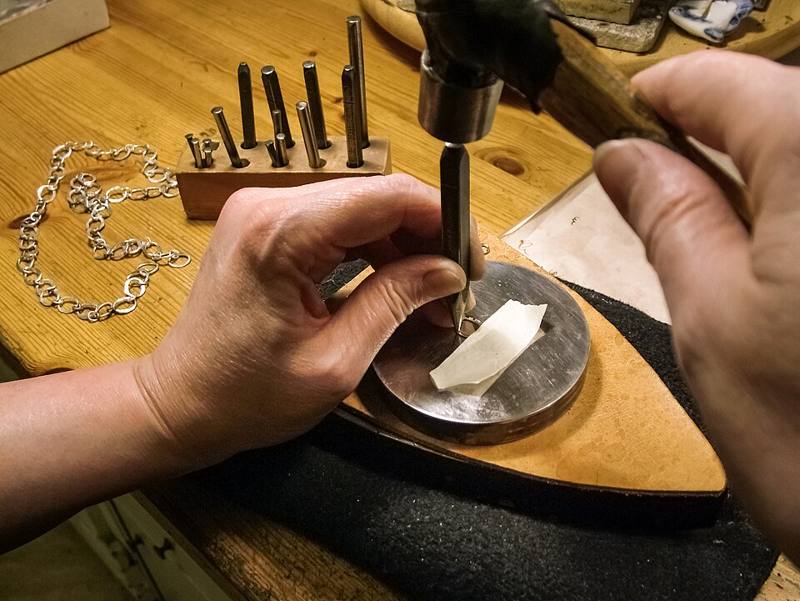
What a hallmark is
A hallmark is a set of official marks stamped on a precious metal item after an independent assay office has tested it. It is a legal guarantee that the item meets the stated purity. The name comes from Goldsmiths' Hall in London, where items were brought to be tested and marked.
Hallmarking is one of the oldest forms of consumer protection. In England, a statute of 1300 set the standard for gold and silver, and the Goldsmiths' Company has been testing and marking precious metals in London for over 700 years.
Hallmarks versus maker's stamps
Not every stamp is a hallmark:
- A hallmark is applied by an independent, official assay office.
- A quality mark or purity stamp (such as 14K or 585) applied by the manufacturer is only the maker's claim.
The UK, Ireland, several other European countries and a number of other nations have compulsory or official hallmarking. The United States does not have independent government hallmarking; makers stamp a quality mark and, by law, must add their registered trademark alongside it.
Reading a UK hallmark
A modern UK hallmark has three compulsory marks plus optional ones:
- Sponsor's mark: initials in a shield identifying the company that sent the item for testing.
- Fineness mark: the purity in parts per thousand, such as 375, 585, 750, 916 or 999, in a shaped shield that indicates gold.
- Assay office mark: which office tested it.
| Assay office | Mark |
|---|---|
| London | Leopard's head |
| Birmingham | Anchor |
| Sheffield | Rose |
| Edinburgh | Castle |
Optional marks include a traditional symbol for gold, a crown for gold, and a date letter showing the year of marking, which is very useful for dating antique pieces.
International hallmarks
The Common Control Mark (CCM) comes from the Hallmarking Convention, an international agreement signed in Vienna in 1972. Items tested by an approved assay office in a member country carry the CCM, a balance-scale symbol, alongside the fineness, and are accepted in all member countries without re-testing.
Other national systems include India's BIS hallmark with a unique HUID code for each item, and various national marks in Europe and the Middle East. Each country's rules differ on which karats are allowed and what weight requires hallmarking.
Common US and international stamps
| Stamp | Meaning |
|---|---|
| 10K, 14K, 18K, 22K | Karat of solid gold |
| 417, 585, 750, 916 | Fineness of solid gold (10K, 14K, 18K, 22K) |
| 999, 9999 | Pure gold |
| GF or 1/20 12K GF | Gold-filled, a thick gold layer bonded to base metal |
| RGP | Rolled gold plate, a thinner bonded layer |
| GP, GEP, HGE | Gold plated or electroplated, a very thin layer |
| Vermeil | Gold over sterling silver |
| 925 | Sterling silver, not gold, even if the item is gold-colored |
Anything marked GP, GEP, HGE, RGP or GF is not solid gold. These are explained in plated, filled and vermeil.
A 925 stamp on a gold-colored item means sterling silver underneath, probably with gold plating or vermeil.
Tips for reading marks
- Use a 10x jeweler's loupe; marks are tiny and often on clasps or inside ring bands.
- Look for both a quality mark and a trademark on US items.
- Worn or partial marks are common on old jewelry. If unsure, have the item tested.
- A mark like "14K" on a cheap item is no guarantee. Counterfeit stamps exist, so price and source matter too. See how to spot fake gold.
Antique and foreign pieces
Old pieces may use systems that are no longer current, such as 15 carat in the UK (discontinued in 1932) or 12 carat. Foreign pieces may use numbers such as 750 or 585 without a karat. Our karat table converts them.