Learn / Purity, karats and hallmarks
Karats explained, with a full karat table
Karats tell you how much of an item is pure gold, in 24ths. Here is a complete table from 24K down to 8K, with percentages, stamps and what each is used for.
Karats are 24ths
A karat (spelled carat outside North America and abbreviated K, Kt or ct) measures the purity of gold. Pure gold is 24 karats. Each karat is one twenty-fourth of the total weight.
- 24K means 24 parts out of 24 are gold: pure, or at least 99.9 percent.
- 18K means 18 parts out of 24 are gold: 75 percent gold, 25 percent other metals.
- 14K means 14 parts out of 24: about 58.3 percent gold.
The formula is simple: karat divided by 24, times 100, equals percent gold.
A karat of purity is not the same as a carat of gemstone weight. A gemstone carat is 0.2 grams. Same word, two different measures.
The karat table
| Karat | Percent gold | Fineness stamp | Common uses |
|---|---|---|---|
| 24K | 99.9 percent or more | 999 or 9999 | Bullion bars and coins, some jewelry in parts of Asia |
| 22K | 91.67 percent | 916 or 917 | Traditional jewelry in South Asia and the Middle East; Gold Eagle and Krugerrand coins |
| 21K | 87.5 percent | 875 | Popular jewelry standard in parts of the Middle East |
| 20K | 83.3 percent | 833 | Less common, some regional jewelry |
| 18K | 75 percent | 750 | Fine jewelry and luxury watches, especially in Europe |
| 14K | 58.3 percent | 583 or 585 | The most common jewelry standard in the US |
| 12K | 50 percent | 500 | Rare; some older pieces |
| 10K | 41.7 percent | 416 or 417 | Lowest karat that can legally be sold as "gold" in the US |
| 9K | 37.5 percent | 375 | Common lower standard in the UK and Commonwealth countries |
| 8K | 33.3 percent | 333 | Lowest standard in some countries such as Germany |
The fineness stamp shows parts per thousand. 14K is often stamped 585 rather than 583, because manufacturers make it slightly above the minimum to make sure it never falls short. See fineness and purity marks.
Why not wear pure gold all the time?
Pure 24K gold is soft and scratches, bends and wears easily. Mixing it with other metals, which creates an alloy, makes it:
- Harder and more durable, so prongs hold stones and rings keep their shape
- Less expensive, because less gold is used
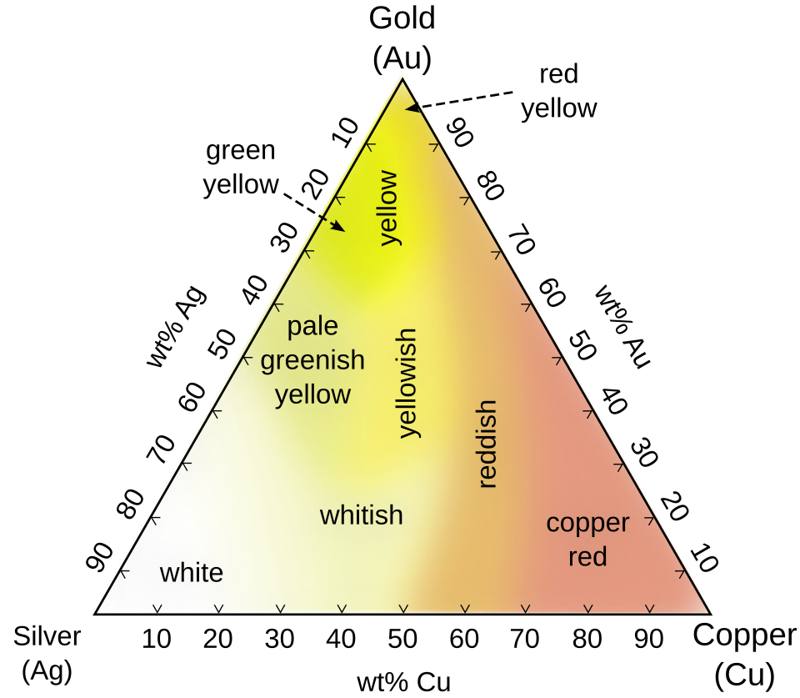
- Different in color, depending on the alloy (white, rose, green; see gold colors and alloys)
The trade-off is that lower karats contain more base metals, which can tarnish and occasionally cause skin reactions, especially if nickel is used. Higher karats look richer and more yellow and are less likely to irritate skin, but they scratch more easily.
Choosing a karat
| You want | Typical choice |
|---|---|
| Maximum purity, bullion value | 24K |
| Rich color, traditional jewelry | 22K or 21K |
| Fine jewelry balance of color and strength | 18K |
| Everyday durable jewelry | 14K |
| Budget and toughness | 10K or 9K |
Quick math: gold in a piece
To estimate pure gold content, multiply the item's weight by its purity:
- A 10-gram 14K chain contains about 10 x 0.583 = 5.83 grams of gold.
- A 5-gram 18K ring contains about 5 x 0.75 = 3.75 grams of gold.
- A 20-gram 22K bangle contains about 20 x 0.9167 = 18.3 grams of gold.
That is the starting point for understanding the melt value of jewelry, though jewelry prices also include design, labor and gemstones. See recycling gold.
Rules on karat marking
Rules vary by country. In the United States, the Federal Trade Commission's guides say items should not be marked or described as gold below 10K, and the US National Gold and Silver Stamping Act sets limits on how far actual purity may fall below the marked karat, along with a requirement for a trademark next to a quality mark. Many countries, including the UK, require independent hallmarks on gold items above a small weight.
If a piece is marked only "gold" with no karat, ask the seller to state the karat in writing, and consider having it tested.