Where gold comes from, from stars to your ring
Gold was not made on Earth. It was forged in violent cosmic events such as colliding neutron stars, then delivered to our planet and concentrated by geology.
Stars make elements
Right after the Big Bang, the universe contained almost nothing but hydrogen and helium, plus a trace of lithium. Every heavier element was built later inside stars. Ordinary stars fuse light atoms into heavier ones in their cores: hydrogen into helium, helium into carbon and oxygen, and so on. In the most massive stars this chain continues up to iron.
Iron is where ordinary fusion stops. Fusing iron into anything heavier uses up energy instead of releasing it. So the elements beyond iron, including gold, platinum and uranium, need a different recipe.
The rapid neutron recipe
The main recipe for gold is called the r-process, short for rapid neutron capture. In an environment with an enormous density of free neutrons, atomic nuclei swallow neutrons faster than they can decay. They swell into very heavy, unstable nuclei, then decay step by step until they settle into stable elements, gold among them.
The r-process needs extreme conditions, far beyond anything inside a normal star. Astronomers have studied two main candidates.
Colliding neutron stars
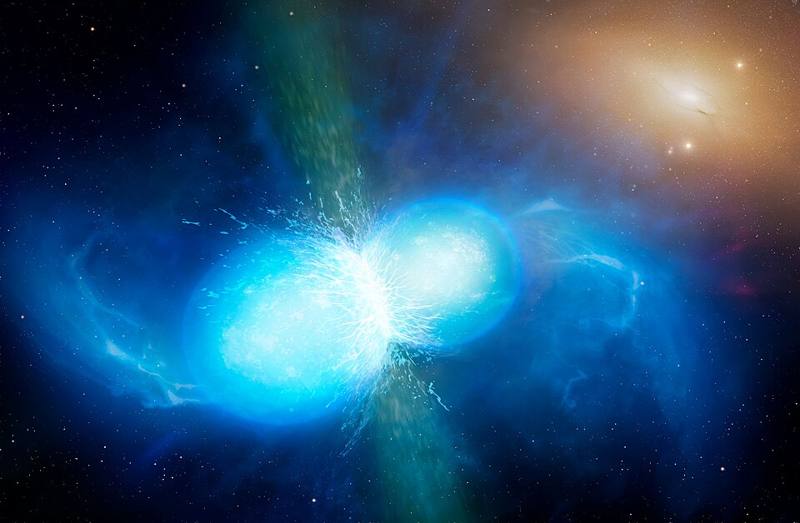
A neutron star is the collapsed core left behind after a massive star explodes. It packs more mass than the Sun into a ball about the width of a city. When two neutron stars orbit each other, they slowly spiral together and finally collide.
On August 17, 2017, gravitational wave detectors (LIGO and Virgo) recorded ripples in space-time from such a merger, an event catalogued as GW170817. Telescopes around the world then saw the glow of the explosion, called a kilonova. The light showed signatures of freshly made heavy elements. This was the first direct evidence that neutron star mergers forge r-process elements, and scientists estimated that this single event produced heavy elements weighing several times the mass of Earth, including a large quantity of gold.
Supernovae and other candidates
For decades, astronomers thought most gold came from supernovae, the explosions of massive stars. Ordinary supernovae now look unlikely to make much gold, but rare kinds of stellar explosions, such as collapsars (rapidly spinning massive stars that collapse into black holes), may contribute. The exact share made by each source is still an active research question, and new observations keep refining the picture. What is settled is that gold is made in rare, extremely violent events, which is one reason it is scarce everywhere in the universe.
How gold reached Earth
Gold made by those ancient events was scattered through space and mixed into the clouds of gas and dust that later formed new stars and planets, including our solar system about 4.6 billion years ago.
When the young Earth was molten, heavy metals like iron sank toward the center. Gold dissolves readily in molten iron, so most of Earth's original gold is thought to have sunk into the core, far out of reach. Many scientists think much of the gold in the crust today arrived a little later, delivered by asteroid impacts after the core had formed, an idea often called the late veneer. This is still debated, but it helps explain why there is any gold near the surface at all.
From crust to mine
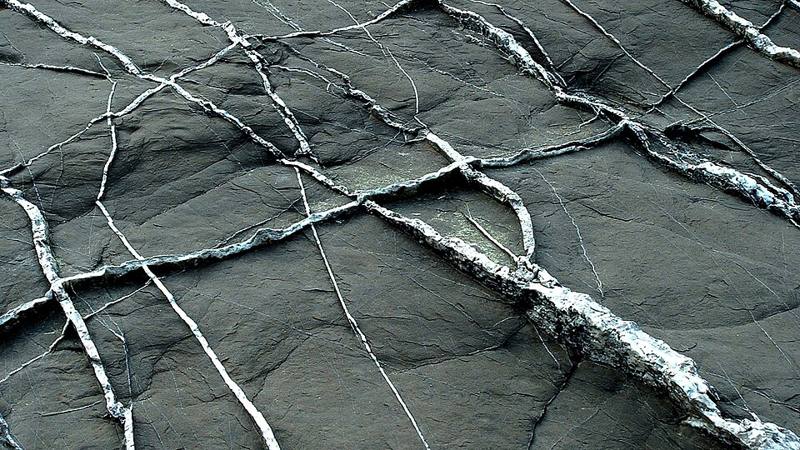
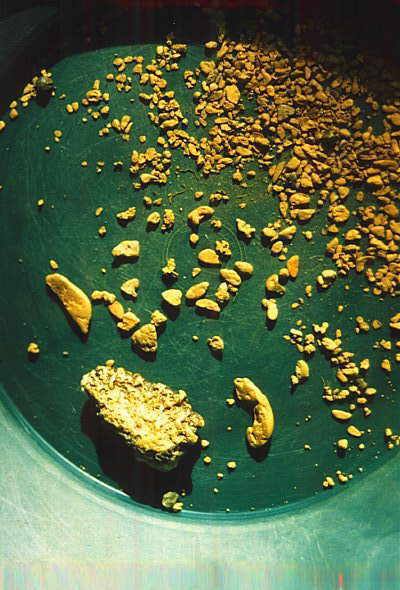
Gold in ordinary crustal rock is extremely dilute, measured in parts per billion. Mining only works where geology has concentrated it, usually by hot fluids moving through cracks in rock. Those fluids dissolve tiny amounts of gold over huge volumes of rock and deposit it in veins, often with quartz. Erosion then frees gold from veins and rivers sort it into placer deposits. The full story is in gold in the Earth.
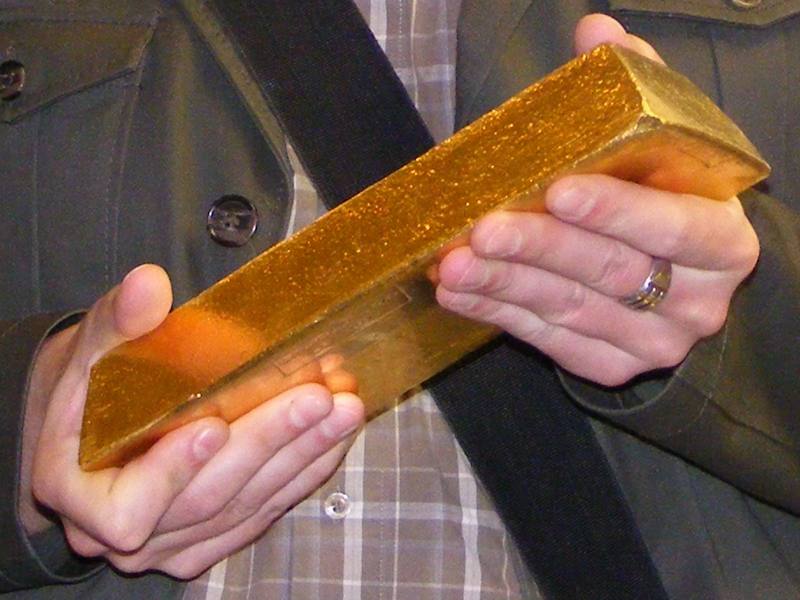
Every gold ring, coin and phone contact contains atoms that were made in a cosmic explosion before the Sun existed.
Quick timeline
| Step | When | What happened |
|---|---|---|
| Heavy element forging | Billions of years ago | Neutron star mergers and other rare events make gold |
| Solar system forms | About 4.6 billion years ago | Gold is mixed into the planet-building material |
| Core formation | Early Earth | Most original gold sinks toward the core |
| Ore formation | Throughout Earth history | Hot fluids concentrate gold into veins |
| Erosion | Ongoing | Rivers carry and sort gold into placer deposits |
Next, see how geology turns traces into mineable deposits in gold in the Earth.