Learn / Famous finds and records
The largest gold nuggets ever found
The Welcome Stranger, the Welcome nugget, the Hand of Faith and the Holtermann specimen. Meet the record-breaking lumps of gold and the people who found them.
What counts as a nugget
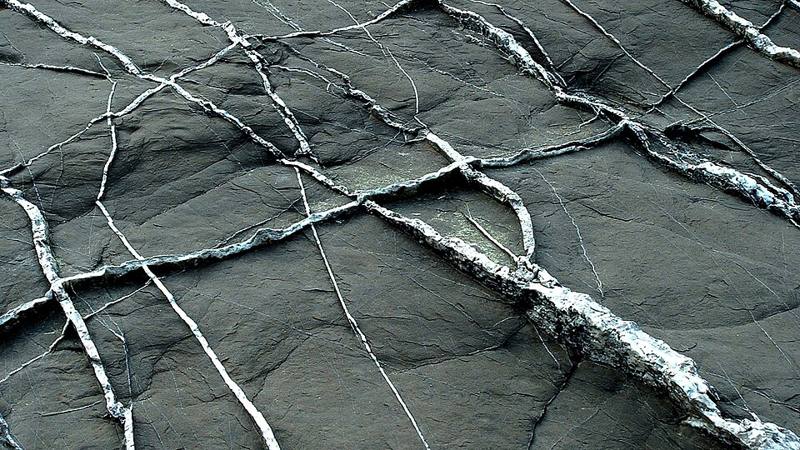
A nugget is a naturally occurring lump of native gold, usually found in placer gravels or soil after weathering out of a vein. Most nuggets are the size of a grain of rice or smaller. Anything over an ounce is a good find for a prospector. A few, almost all from Australia, have weighed tens of kilograms. When gold is still embedded in rock, the piece is usually called a specimen rather than a nugget.
The Welcome Stranger, the biggest of all
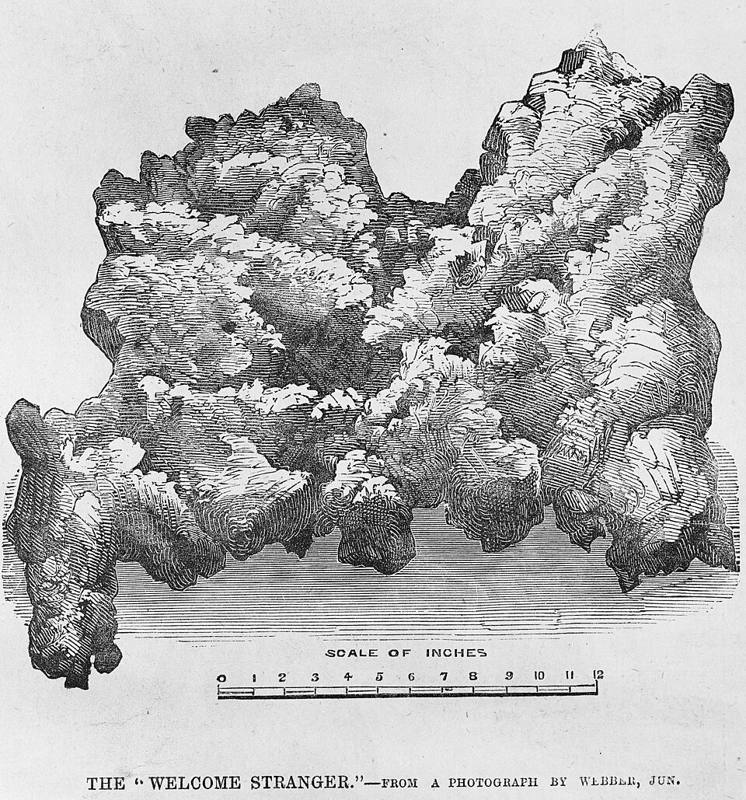
The Welcome Stranger is widely recognized as the largest alluvial gold nugget ever found.
- Found: February 5, 1869, at Moliagul, near Dunolly in Victoria, Australia
- Finders: John Deason and Richard Oates, two Cornish-born miners
- Weight: about 2,520 troy ounces gross (about 78 kilograms), with about 2,284 troy ounces (about 71 kilograms) of gold after cleaning and melting
The nugget was lying just a few centimeters below the surface, near the roots of a tree. It was so big that it could not fit on any available scale, so it was broken into pieces to weigh. It was melted down soon after, so only replicas survive. A monument marks the find site.
The Welcome nugget
The Welcome nugget was found in 1858 at Bakery Hill in Ballarat, Victoria, by a group of miners working underground. It weighed about 2,217 troy ounces, roughly 69 kilograms, making it the second-largest nugget on record. It was displayed in Melbourne and London before being melted down in 1859.
The Holtermann specimen
In 1872, miners at Hill End in New South Wales, working for a mine part-owned by Bernhardt Holtermann, broke out a huge mass of gold and quartz. The Holtermann specimen weighed about 286 kilograms including the rock, with an estimated gold content of around 3,000 troy ounces. It is considered the largest single specimen of gold ever found. It was crushed to extract the gold, but famous photographs of Holtermann standing beside it survive.
The Hand of Faith
The Hand of Faith was found in 1980 near Kingower, Victoria, by prospector Kevin Hillier using a metal detector. It weighs about 875 troy ounces (about 27 kilograms) and is one of the largest nuggets ever found with a detector. Unlike most giant nuggets, it was not melted. It was sold and has been on public display in the United States.
Other notable nuggets
| Nugget | Where and when | Approximate size |
|---|---|---|
| Canaa nugget (Pepita Canaa) | Serra Pelada, Brazil, 1983 | About 60 kilograms; one of the largest nuggets still in existence, held by Brazil's central bank museum |
| Mojave nugget | Southern California, 1977 | About 156 troy ounces, found with a metal detector |
| Normandy nugget | Western Australia, 1995 | About 800 troy ounces, displayed in a museum collection |
Weights of historic nuggets come from records of the time and vary slightly between sources.
Why the biggest nuggets were melted
In the 19th century, a nugget was worth its weight in gold and little more. Miners needed cash, so most giant nuggets went straight to the bank and the melting pot. Today, large natural nuggets often sell for well above their gold content because collectors and museums prize them.
Why Australia?
Victoria's goldfields have an unusual combination of rich quartz veins and deeply weathered ground, and the region has been searched intensely for more than 170 years. The rise of metal detectors since the 1970s led to a new wave of nugget finds in old goldfields, in Victoria and Western Australia in particular.
Nuggets are still found in Victoria's "Golden Triangle" today, mostly by detectorists with permits, though finds over a kilogram are rare.
For the gold rush that produced these giants, read the Australian gold rushes.