Learn / Famous finds and records
Top gold-producing countries
China, Russia, Australia, Canada and the United States lead world gold mine production. How the ranking has changed over time, how much gold is mined each year and where the numbers come from.
How much gold is mined each year
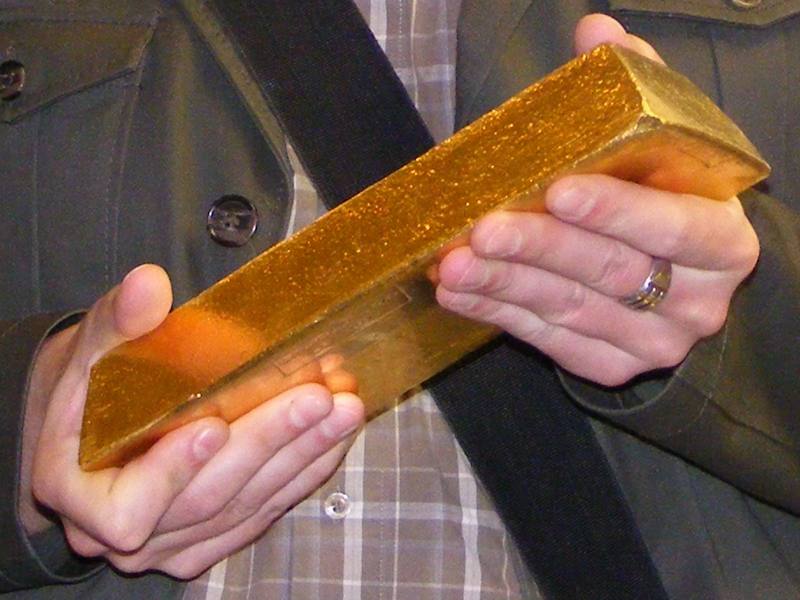
World gold mine production is roughly 3,000 to 3,600 tonnes a year in recent years, according to the US Geological Survey (USGS) and the World Gold Council. That is about the volume of a cube only around 5.4 to 5.7 meters on each side, because gold is so dense. See how much gold exists.
Recycled gold, mostly from old jewelry, adds over a thousand tonnes more to supply in a typical year.
The leading producers
Rankings shift slightly from year to year. In recent USGS estimates, the top producers have included:
| Country | Approximate position | Notes |
|---|---|---|
| China | Largest producer | Has led world production since 2007 |
| Russia | Among the top 2 or 3 | Large mines in Siberia and the Far East |
| Australia | Among the top 3 | Major mines in Western Australia |
| Canada | Top 5 | Ontario and Quebec are key regions |
| United States | Top 10 | Most production comes from Nevada |
| Ghana | Top 10 | Africa's leading producer in recent years |
| Others in the top group | Varies | Mexico, Kazakhstan, Uzbekistan, Indonesia, Peru, South Africa |
For exact current tonnages, check the latest USGS Mineral Commodity Summaries or World Gold Council data, which are updated every year.
How the ranking changed
South Africa dominated world gold production for most of the 20th century, thanks to the vast Witwatersrand Basin. At its peak around 1970, it produced roughly a thousand tonnes a year, a very large share of the world total. As the deep reefs became harder and more expensive to mine, its output fell steadily. See the Witwatersrand gold rush and deepest gold mines.
China overtook South Africa as the largest producer in 2007, after decades of expanding many small and medium mines.
Australia has been a major producer since its 19th-century gold rushes and remains one of the top countries, with Western Australia home to large operations. See Australian gold rushes.
The United States produced much of its early gold in California and Alaska, but today Nevada accounts for most of US output, mainly from large open-pit and underground mines along the Carlin Trend.
Where gold reserves are
Production is not the same as reserves, which are known deposits that can be mined economically. Countries such as Australia, Russia and South Africa report large reserves. Reserves change as prices rise or fall, because higher prices make lower-grade ore worth mining.
Large-scale and small-scale mining
A significant share of the world's gold comes from artisanal and small-scale mining, where individuals and small groups use simple tools. It supports millions of livelihoods, but it can also involve dangerous conditions and mercury pollution. See environmental impact.
Producers versus holders
The countries that mine the most gold are not always the ones that hold the most. Central bank gold reserves are dominated by countries such as the United States, Germany, Italy and France, which mine little or no gold themselves. Most of that gold was accumulated during the era of the gold standard. See the gold standard and Bretton Woods.
Production figures are estimates, often revised later. When numbers differ between sources, it is usually because of different methods or update timing.