The Witwatersrand gold rush
In 1886 gold was found on a ridge in South Africa. It turned out to be the largest gold deposit ever known, and it built the city of Johannesburg almost overnight.
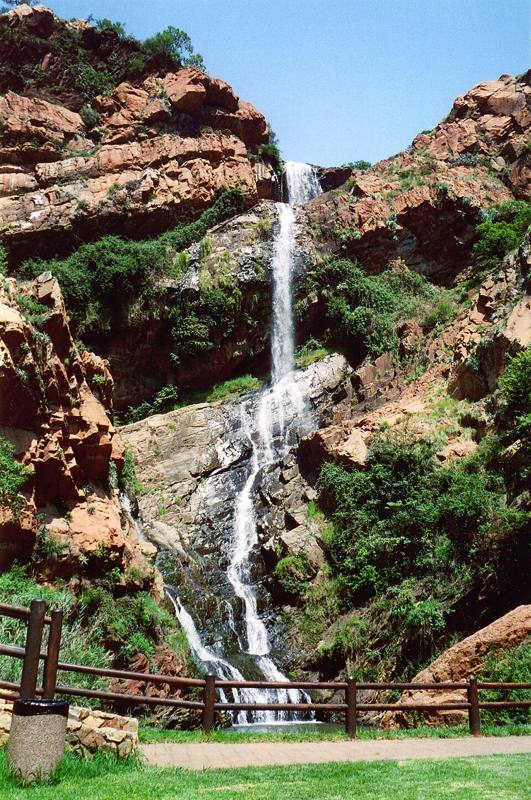
A ridge of white waters
The Witwatersrand, often called simply the Rand, is a long ridge in the Gauteng region of South Africa. The name is Afrikaans for "ridge of white waters". In 1886, prospectors identified gold-bearing rock on a farm called Langlaagte. An Australian prospector named George Harrison is usually credited with the find, though several people were involved. The area was declared a public goldfield later that year.
Within months, a mining camp grew into a town named Johannesburg. Within about a decade it was one of the largest cities in southern Africa. Today the greater Johannesburg area is South Africa's economic center.
A different kind of gold
Most earlier gold rushes, such as California and the Klondike, were based on placer gold that individuals could pan. The Rand was different. Its gold lies in ancient layers of rock called conglomerate, made of quartz pebbles cemented together, which miners call reefs. The gold particles are mostly tiny and spread through the rock, alongside pyrite (fool's gold).
These reefs are about 2.9 to 2.7 billion years old. They dip steeply into the ground, so following them meant digging deeper and deeper. Geologists still debate exactly how the gold got there; read gold in the Earth for the main ideas.
Why it needed big companies
Rand gold could not be recovered with a pan. It needed:
- Shafts and tunnels, eventually reaching depths of several kilometers
- Crushing mills to grind tonnes of hard rock
- Chemical processing to extract fine gold
This required large amounts of money and engineering, so mining was soon dominated by a few large companies financed by investors in London and elsewhere.
The cyanide breakthrough
Early Rand miners hit a problem. Below the weathered surface rock, the ore contained sulfide minerals, and mercury amalgamation recovered only part of the gold. In 1887, three chemists in Scotland, John Stewart MacArthur and the brothers Robert and William Forrest, patented the cyanide process, which dissolves gold from crushed ore. It was introduced on the Rand around 1890 and dramatically increased gold recovery. Without it, much of the Rand's gold might not have been profitable. The method is still the basis of most gold extraction today; see cyanide and heap leaching.
A world record producer
The Witwatersrand Basin has produced more gold than any other region on Earth, often estimated at around a third or more of all gold ever mined. For much of the 20th century, South Africa was the world's largest gold producer by a wide margin, at its peak in 1970 producing about 1,000 tonnes in a single year.
Production has since declined as the remaining ore lies extremely deep, costs have risen and grades have fallen. South Africa is now well behind countries such as China, Russia and Australia. See top producing countries.
The deepest mines
To follow the reefs, Rand mines went deeper than any other mines on Earth. Mponeng, west of Johannesburg, reaches roughly 4 kilometers below the surface, where rock temperatures can exceed 60 C and the mines need massive cooling systems. See the deepest gold mines.
Labor and history
The mines relied on large numbers of migrant workers from across southern Africa, who often lived in single-sex hostels far from their families and worked in dangerous conditions. The system shaped the social and economic history of the region for generations, and the health effects of mine dust, such as silicosis, remain a serious issue for former miners.
Key facts
| Fact | Detail |
|---|---|
| Discovery | 1886, Langlaagte farm |
| City founded | Johannesburg, 1886 |
| Ore type | Gold in ancient quartz pebble conglomerate reefs |
| Key technology | Cyanide process, from around 1890 |
| Peak South African output | About 1,000 tonnes in 1970 |