Learn / Famous finds and records
The deepest gold mines
South Africa's gold mines reach around 4 kilometers below the surface, the deepest holes humans work in. How they got so deep, how miners cope with heat and pressure, and other deep mines around the world.
Why South African mines go so deep
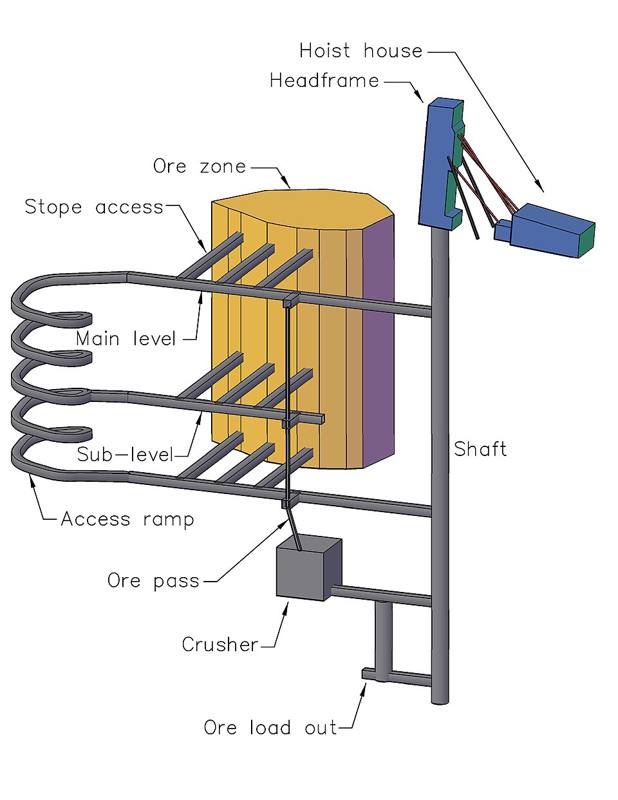
The gold of the Witwatersrand Basin in South Africa lies in ancient layers of rock called reefs, thin bands of gold-bearing conglomerate that dip steeply into the earth. Miners followed these reefs downward for more than a century. As shallow ore ran out, shafts went deeper and deeper. See the Witwatersrand gold rush.
The result is a group of mines that are the deepest in the world, reaching roughly 4 kilometers (about 2.5 miles) below the surface.
The deepest of them all
| Mine | Location | Approximate depth | Notes |
|---|---|---|---|
| Mponeng | Gauteng, South Africa | About 4 km below surface | Widely cited as the world's deepest operating mine |
| TauTona | Gauteng, South Africa | About 3.9 km | Long held the depth record; operations have since wound down |
| Other Witwatersrand mines | South Africa | Often 3 km or more | Several of the deepest mines on Earth |
| LaRonde | Quebec, Canada | About 3 km | Among the deepest mines in the Western Hemisphere |
| Homestake (closed) | South Dakota, USA | About 2.4 km | Former gold mine, now an underground physics laboratory |
Depths change as mines expand or close, so figures are approximate.
Life 4 kilometers down
Working at such depths creates extreme challenges.
Heat. Rock temperature rises with depth. In the deepest South African mines, the rock can be around 60 degrees Celsius (about 140 degrees Fahrenheit). Without cooling, conditions would be deadly. Mines pump in huge volumes of chilled air and use ice slurry or chilled water to keep working areas bearable.
Pressure and rockbursts. The weight of kilometers of rock creates enormous stress. Rock can fail suddenly and violently in events called rockbursts, a major safety hazard. Mines use support systems, careful mining sequences and seismic monitoring.
The journey. Getting to the bottom can take an hour or more, using multiple shafts and cages that drop at high speed, followed by long walks or rides through tunnels.
Ventilation and logistics. Everything, from air to water to ore, must travel vast distances up and down shafts.
Why go so deep?
Deep mining is very expensive, but it continues where the ore is rich enough. The Witwatersrand reefs have produced a huge share of all the gold ever mined, and in deep mines gold grades can be high enough to justify the cost. As grades fall and costs rise, some deep mines become unprofitable and close.
Life in the deep rock
Deep mines have helped scientists discover microbes living kilometers underground, in water trapped in rock fractures. Some of these organisms survive without sunlight, getting energy from chemical reactions in the rock. Deep mines have also hosted physics experiments, because the rock above shields detectors from cosmic rays. The former Homestake mine in South Dakota is now the Sanford Underground Research Facility.
Deep mines and safety
Deep-level mining has a long history of serious accidents. Safety has improved through better ventilation, rock support, seismic monitoring and automation, but it remains one of the most demanding workplaces on Earth. See hard-rock mining and environmental impact.
Even the deepest gold mines reach only a tiny fraction of the way through Earth's crust, which is roughly 30 to 50 kilometers thick under the continents.