Hard-rock (underground) gold mining
Most of the world's gold comes from solid rock. Underground mines reach it through shafts, ramps and tunnels, then drill, blast and haul ore to the surface for processing.
From veins to mines
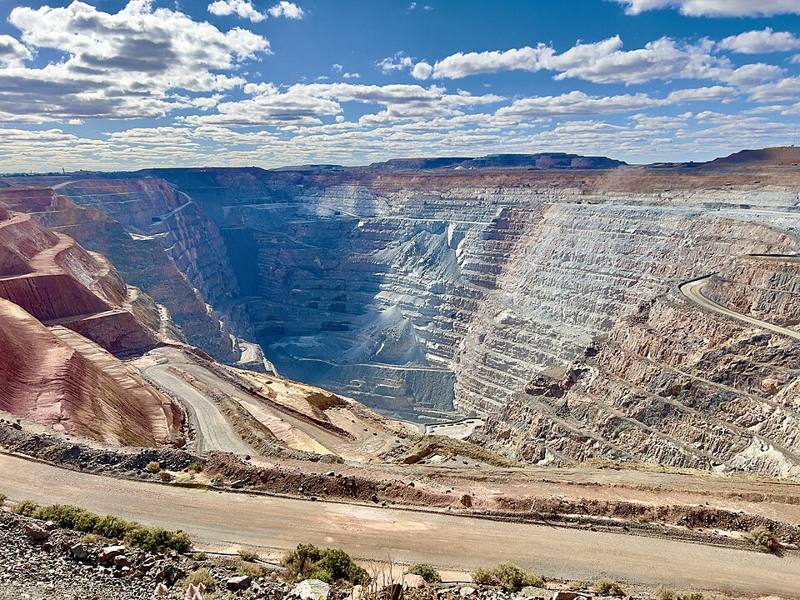
Hard-rock mining, also called lode mining, extracts gold from the solid rock where it formed, usually in quartz veins or larger mineralized zones (see gold in the Earth). When a deposit is near the surface and spread out, companies often dig an open pit. When ore is deep, narrow or high grade, they mine underground.
Underground gold mines generally need higher grades than open pits to pay for the extra cost. Many work rock with several grams of gold per tonne, compared with around one gram or less in many large open pits.
Finding and proving the deposit
Before any mine is built, geologists spend years on exploration:
- Mapping rocks and sampling soil and stream sediments for traces of gold
- Using geophysics, such as magnetic and electrical surveys, to see structures underground
- Drilling cores, cylinders of rock that are logged and sent to labs for assaying
- Building a 3D model of the deposit and estimating its tonnes and grade
- Running feasibility studies on costs, recovery and environmental impact
Only a small fraction of exploration projects ever become mines, and taking a discovery to production commonly takes a decade or more.
Getting underground
| Access | Description |
|---|---|
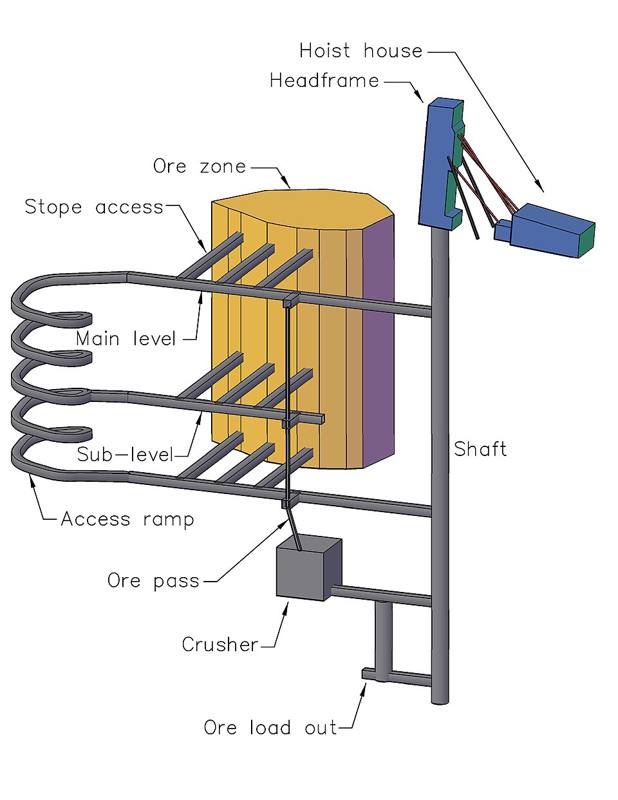
| Vertical shaft | A deep vertical hole with a hoist (cage for people, skips for rock). Used for the deepest mines. |
| Decline or ramp | A spiral tunnel trucks can drive down. Common in modern mines to moderate depths. |
| Adit | A horizontal tunnel into a hillside |
From the main access, miners drive horizontal tunnels called drifts and crosscuts toward the ore, at intervals called levels.
The mining cycle
Underground hard-rock mining usually follows a repeating cycle:
- Drill a pattern of holes into the rock face with a drill rig (a jumbo).
- Charge the holes with explosives.
- Blast, usually at shift change when everyone is out of the area, then ventilate to clear fumes.
- Muck, loading broken rock with a loader into trucks or ore passes.
- Support the new opening with rock bolts, mesh and sprayed concrete (shotcrete).
The large openings where ore is removed are called stopes. Common methods include long-hole stoping, where big blocks of ore are blasted and pulled out from below, and cut-and-fill, where each mined slice is backfilled with waste rock or cemented tailings so miners can work on top of it.
Deep mining challenges
Rock temperature rises with depth. In the deepest South African mines, around 4 kilometers down, rock can exceed 60 C, so huge refrigeration plants pump chilled air and ice slurry underground. Deep mines also face rockbursts, sudden violent failures of highly stressed rock. See the deepest gold mines.
From rock to processing
Ore is hoisted or trucked to a mill on the surface, where it is:
- Crushed into gravel-sized pieces
- Ground in large rotating mills with steel balls and water into a fine slurry
- Sent through gravity circuits that catch coarse free gold
- Leached with cyanide to dissolve fine gold (see cyanide and heap leaching)
Some ores are refractory, meaning gold is locked inside sulfide minerals. These need extra steps such as roasting, pressure oxidation or bacterial oxidation before leaching.
Safety and modern mines
Underground mining is hazardous, and modern mines rely on strict ventilation, ground support, gas monitoring, refuge chambers and training. Automation is growing: remote-controlled loaders, battery-electric vehicles that cut diesel fumes and underground communication networks help keep people away from the most dangerous areas.
Never enter old mine workings. Abandoned tunnels can collapse and often contain bad air or hidden shafts.
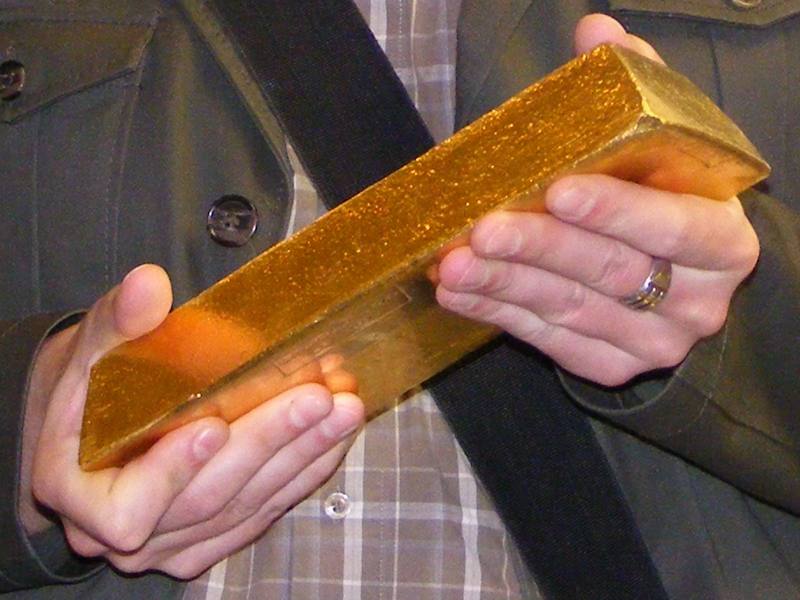
The gold leaves the mine as a dore bar, which then goes to smelting and refining.