Open-pit gold mining
Open-pit mines dig huge stepped holes to reach large, low-grade gold deposits near the surface, moving millions of tonnes of rock to recover each tonne of gold.
Why dig a giant hole
Many of today's gold deposits contain only tiny amounts of gold, often around one gram per tonne of rock or less, but spread through enormous volumes near the surface. Tunneling into such rock would be too expensive. Instead, miners remove the rock from the top down, creating an open pit. The low cost per tonne of moving rock with huge machines makes low-grade ore profitable.
The shape of a pit
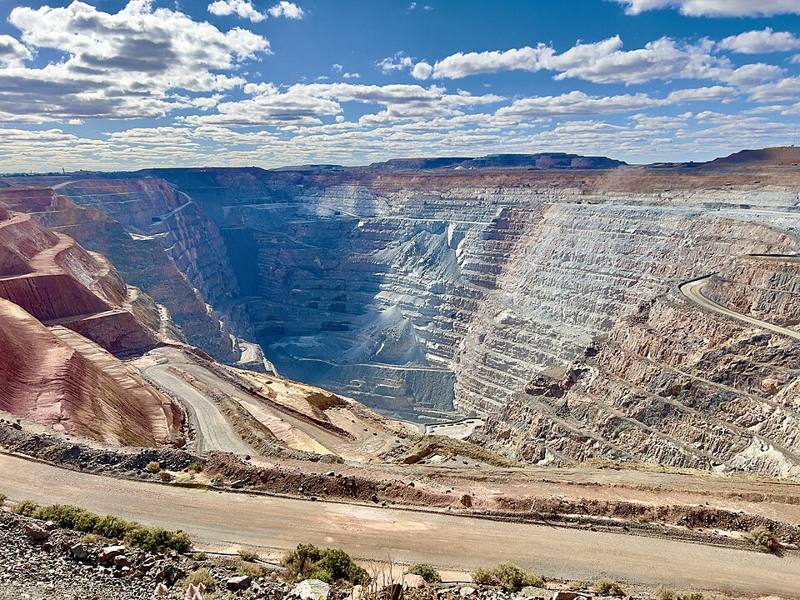
An open pit looks like a giant stepped bowl. The steps are called benches, typically around 10 to 15 meters high. The pit walls must be sloped so they stay stable, so a pit is much wider at the top than at the bottom. A spiral haul road winds from the bottom to the rim so trucks can carry rock out.
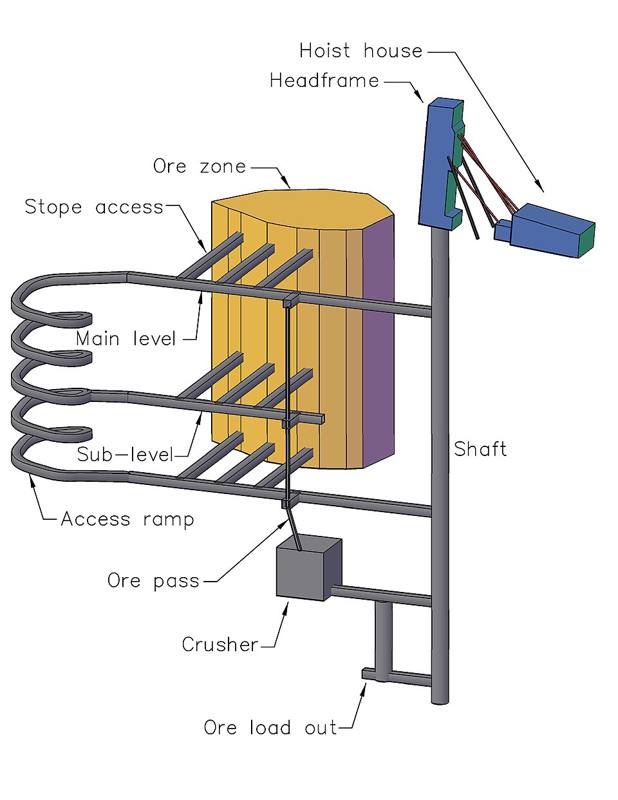
Every pit has a strip ratio: the amount of waste rock removed for each tonne of ore. Because the walls must slope, going deeper means removing much more waste. At some point it becomes cheaper to switch to underground mining, and many mines do both.
The mining cycle
- Drill a grid of blast holes in the bench.
- Sample the drill cuttings to map where the ore is (grade control).
- Blast to break the rock.
- Load broken rock with electric shovels or hydraulic excavators.
- Haul it in large trucks; the biggest carry around 300 tonnes or more per load.
- Sort: ore goes to the processing plant or leach pads, waste goes to waste dumps.
Famous gold pits
| Mine | Location | Notes |
|---|---|---|
| Fimiston Open Pit (the "Super Pit") | Kalgoorlie, Western Australia | Formed by merging old underground mines on the Golden Mile into one huge pit, around 3.5 kilometers long |
| Boddington | Western Australia | One of Australia's largest gold mines, also producing copper |
| Muruntau | Uzbekistan | One of the largest and deepest open-pit gold mines in the world |
| Carlin Trend mines | Nevada, USA | Many pits on microscopic "invisible" gold, discovered in the 1960s |
The Carlin Trend is a famous example of how open pits changed gold mining. Its gold is so fine it cannot be seen even with a microscope in many samples, but large-scale open-pit mining and cyanide leaching made it one of the most productive gold regions in the world. See the Witwatersrand for a very different deposit type.
How much rock for one ring?
Because grades are so low, open-pit mines move astonishing tonnages. If ore grades one gram per tonne, then a tonne of ore holds one gram of gold, and that is before counting waste rock. A wedding band of around 5 grams of 18K gold contains about 3.75 grams of pure gold. With waste rock included, a ring like that can represent several tonnes of rock moved, though the exact figure varies hugely between mines.
Processing
Ore from the pit is either:
- Milled and leached in tanks (carbon-in-leach), the usual choice for higher-grade or harder ore, or
- Heap leached, piled on lined pads and sprinkled with dilute cyanide solution, a cheaper option for very low-grade ore.
Both are explained in cyanide and heap leaching.
Environmental footprint
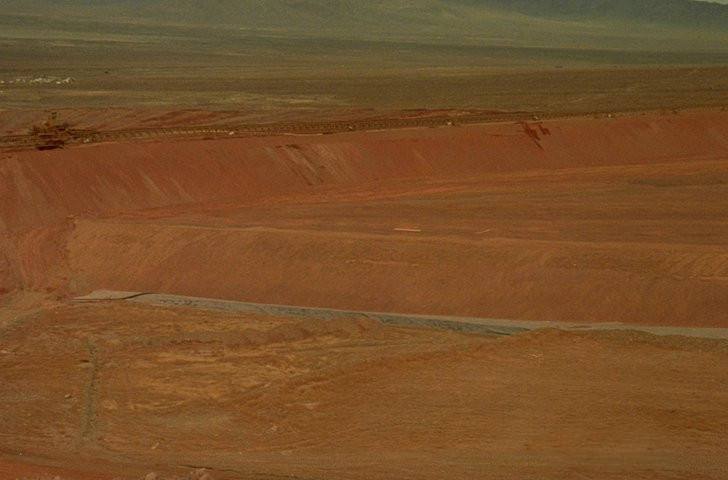
Open pits leave large holes, waste rock dumps and tailings facilities. Concerns include:
- Dust and noise for nearby communities
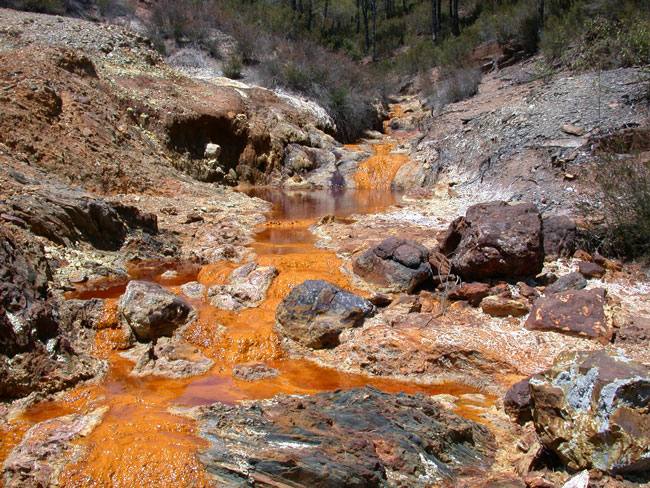
- Acid rock drainage, when sulfide minerals in waste rock react with air and water to make acidic, metal-rich runoff
- Water use and effects on groundwater
- Habitat loss over large areas
Modern regulations usually require companies to post financial bonds for closure, reshape dumps, cover them with soil and plant vegetation, and manage water for decades after mining ends. Some old pits become lakes. More in environmental impact.
Haul trucks in large open pits are so big that their tires can be taller than an adult, and some mines now run driverless autonomous fleets.