Smelting and refining gold
Mines pour rough dore bars, and refineries turn them into 99.5 to 99.99 percent pure gold using chlorine gas, electrolysis or chemical methods. Here is the path from mine to bar.
From sludge to dore
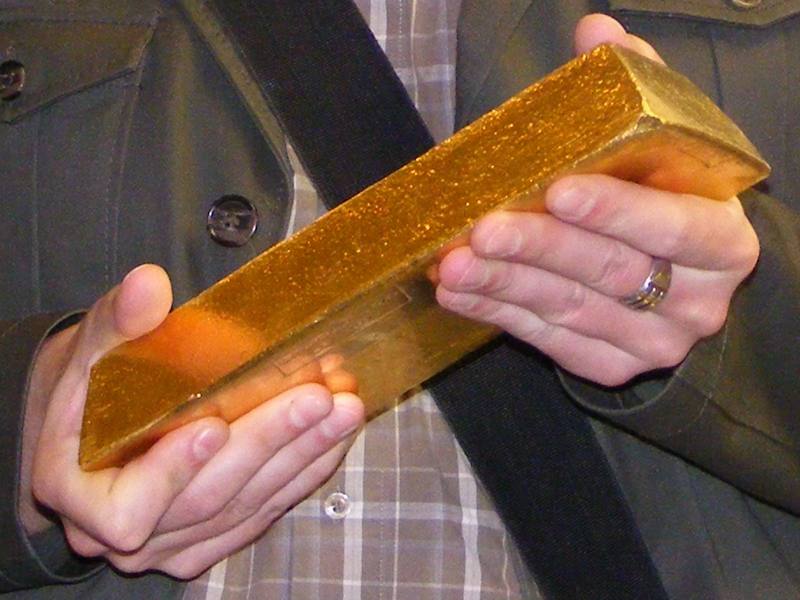
At the mine, gold recovered from leaching ends up as a sludge or as gold plated on cathodes. This is dried and melted in a furnace with fluxes such as borax, silica and sodium nitrate. The fluxes combine with impurities like iron, copper and sand to form a glassy slag that floats on top of the molten metal. The slag is poured off, and the metal is cast into bars called dore (from the French for "gilded").
Dore is not pure gold. It is usually a mix of gold and silver with smaller amounts of base metals. Gold content varies widely by mine, and some dore is mostly silver. Mines ship dore bars under secure transport to a refinery.
Step 1: Weigh, melt and sample
At the refinery, each incoming bar is weighed and melted, and samples are taken so that both the mine and the refinery agree on how much gold and silver the batch contains. This is done by fire assay and other lab methods described in assaying. Payment to the mine is based on these results.
Step 2: Refine
There are several main refining methods, often used together.
The Miller process (chlorine)
Invented in the 19th century, the Miller process bubbles chlorine gas through molten dore. Silver and base metals react to form chlorides, which float to the surface as a slag and are skimmed off. What remains is gold of about 99.5 percent purity. It is fast and handles large volumes, so it is widely used as a first refining step.
The Wohlwill process (electrolysis)
The Wohlwill process, developed in Germany in the 1870s, uses electrolysis. Anodes cast from impure gold sit in a bath of hydrochloric acid and gold chloride. When current flows, gold dissolves from the anodes and deposits on thin pure gold cathodes, while impurities stay behind. This produces gold of 99.99 percent (four nines) purity or better. It is slower and ties up more gold in the process, so it is often used to upgrade Miller gold.
Aqua regia and chemical refining
Many modern refineries, especially smaller ones and those handling scrap, dissolve gold in aqua regia or in chlorine-based solutions, then precipitate pure gold using a chemical reducing agent. This can also reach 99.99 percent.
Cupellation and parting, the old ways
Before chlorine and electrolysis, refiners used cupellation (oxidizing base metals away in a porous cup) and parting (dissolving silver out with nitric acid, or by cementation with salt as the Lydians did). See the first gold coins.
Step 3: Cast into bars and grain
Refined gold is cast into bars of standard sizes, or poured into water to make grain for jewelry makers. Common products include:
| Product | Typical weight | Typical purity |
|---|---|---|
| Large Good Delivery bar | About 400 troy oz (12.4 kg) | At least 99.5 percent |
| Kilobar | 1 kilogram (32.15 troy oz) | 99.99 percent |
| Small cast or minted bars | 1 gram to 10 oz | 99.99 percent |
| Gold grain | Loose granules | 99.99 percent |
Minted bars are punched from rolled gold strip and pressed with a design, giving a sharp finish. Cast bars are poured into molds and have a softer, rippled look.
Who refines the world's gold
Large refineries are concentrated in a few places, including Switzerland, which handles a large share of global refining, plus refineries in places such as the UAE, India, Hong Kong, Australia, Canada, South Africa and the United States. National mints often also refine.
The London Bullion Market Association (LBMA) keeps a Good Delivery List of refiners whose large bars are accepted in the London market. Accredited refiners must meet strict standards for purity, bar dimensions and markings, and follow responsible sourcing rules to avoid gold linked to serious abuses. See fineness and purity marks.
Refining recycled gold
Refineries also process old jewelry, dental gold and electronic scrap. Because pure gold is identical whatever its source, recycled gold refined to 99.99 percent is the same as newly mined gold. See recycling gold.
Refining involves molten metal, toxic gases and strong acids. It is industrial work and not a home project.