Gold in the ancient world
From the 6,000-year-old Varna gold to Roman mines that reshaped mountains and the goldwork of the Americas, a tour of gold across early civilizations.
The oldest worked gold
Gold was one of the first metals people used because it can be found as pure metal and shaped by hammering cold. The oldest large collection of processed gold yet found comes from the Varna necropolis, a cemetery near the Black Sea coast of present-day Bulgaria, discovered in 1972. Its graves, dated to roughly 4600 to 4200 BC, held thousands of gold objects, including beads, bracelets and appliques. It shows that sophisticated goldworking and social ranking existed in Europe well before the first cities of Mesopotamia and Egypt.
Mesopotamia
In Mesopotamia, between the Tigris and Euphrates rivers, goldsmiths produced spectacular pieces. The Royal Cemetery at Ur, in what is now southern Iraq, excavated in the 1920s and 1930s, contained gold headdresses, vessels and jewelry from around 2600 to 2500 BC. Mesopotamian scribes recorded values and weights in a system of units such as the shekel and the mina.
The Greek world
Greek goldsmiths of the classical and Hellenistic periods were famous for fine filigree and granulation, making wreaths of gold leaves, earrings and necklaces so delicate they look almost alive. Greek myth is full of gold: the Golden Fleece, the golden apples and King Midas, whose touch turned everything, including his food, to gold. The Midas tale has become a lasting warning about greed.
Steppe goldwork
Nomadic peoples of the Eurasian steppe, often grouped under the name Scythians, made striking gold objects decorated with animals such as stags, horses and big cats in a style known as the animal style. Many pieces were found in burial mounds called kurgans and are now held in museums such as the State Hermitage Museum.
Rome and the mountain-moving mine
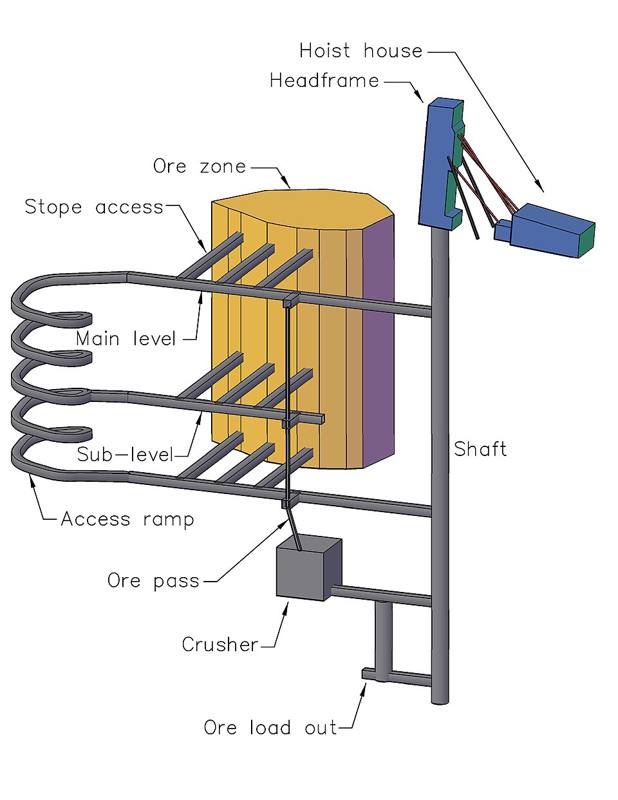
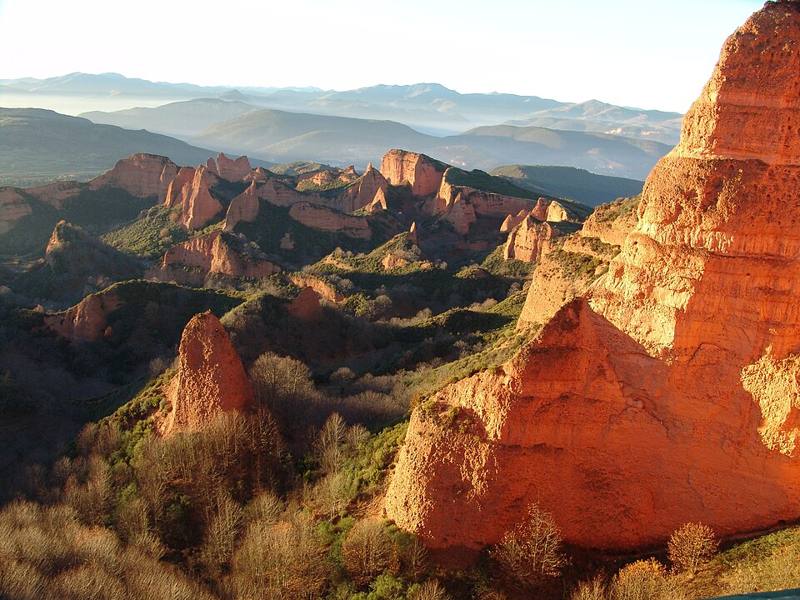
The Romans mined gold on an industrial scale. At Las Medulas in northwest Spain, now a UNESCO World Heritage Site, Roman engineers used a method the writer Pliny the Elder described as ruina montium, the "wrecking of mountains". They brought water through long channels, stored it in reservoirs above the hills and released it into tunnels dug through the gold-bearing sediments. The rushing water collapsed whole hillsides and washed the gravel through sluices where gold settled out. The result is a landscape of red pinnacles and caves that still looks unearthly today.
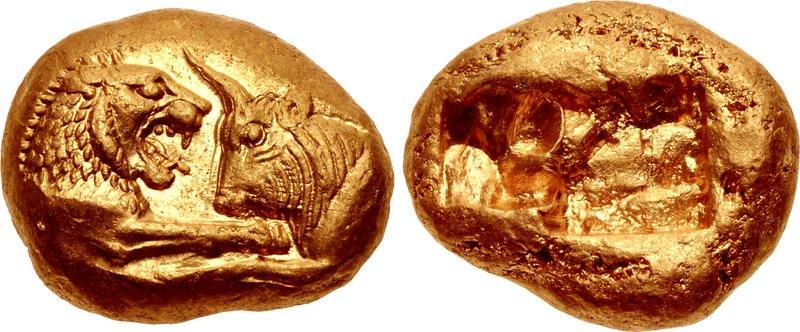
Rome also issued gold coins, the aureus and later the solidus, which remained a trusted coin in the eastern Mediterranean for centuries. See the first gold coins.
West Africa
For centuries, gold from West Africa crossed the Sahara by camel caravan to North Africa and the Mediterranean. The empires of Ghana, Mali and Songhai grew powerful partly through control of this trade. Mansa Musa, a 14th-century ruler of Mali, is often remembered for his enormous wealth in gold, which he carried on a famous journey through Cairo. Accounts say he gave away so much gold there that its local value fell for years.
The Americas
In the Americas, gold was worked for thousands of years before European contact. Cultures in present-day Peru, Colombia, Panama and Mexico developed advanced techniques, including:
- Lost-wax casting, making a wax model, covering it in clay, melting out the wax and pouring in gold
- Tumbaga, an alloy of gold and copper whose surface was treated to bring gold to the outside, a technique called depletion gilding
- Hammered sheet gold, ear spools, pendants and masks
The Museo del Oro (Gold Museum) in Bogota, Colombia, holds one of the largest collections of pre-Columbian gold in the world. The legend of El Dorado, a gilded chief who covered himself in gold dust, grew from ceremonies of the Muisca people at Lake Guatavita.
Much pre-Columbian gold was melted down after European arrival, so the surviving pieces are a small fraction of what once existed.
A timeline of ancient gold
| Approximate date | Place | Highlight |
|---|---|---|
| 4600 to 4200 BC | Varna, Bulgaria | Oldest large hoard of worked gold |
| About 2600 BC | Ur, Mesopotamia | Royal Cemetery goldwork |
| 14th century BC | Egypt | Tutankhamun's tomb treasures |
| 6th century BC | Lydia | First pure gold coins |
| 1st and 2nd centuries AD | Las Medulas, Spain | Roman hydraulic gold mining |
| 14th century AD | Mali | Trans-Saharan gold trade at its height |
The next big chapter in gold history came with the California gold rush.