Gold leaf and gilding
Gold can be hammered thinner than almost any other material. Learn how gold leaf is made, the main gilding methods, where you will see it and why edible gold is safe in small amounts.
The most malleable metal
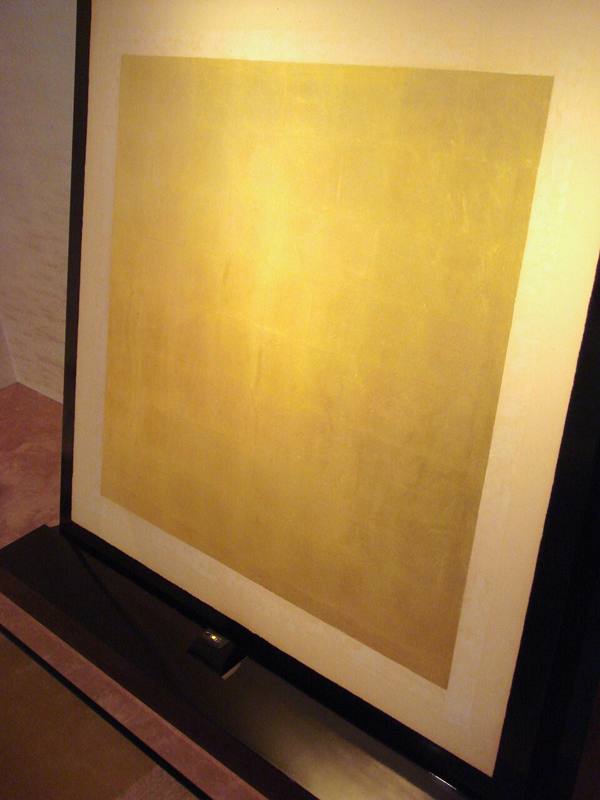
Gold is the most malleable metal: it can be hammered into sheets so thin that light passes through them, glowing green. Gold leaf is often around 0.1 micrometers thick, hundreds of times thinner than a human hair. That is why a small amount of gold can cover a large surface. See properties of gold.
How gold leaf is made
Traditional goldbeating has changed surprisingly little over thousands of years:
- Alloying and casting. Gold is melted, often with small amounts of silver or copper to adjust color and workability, then cast into a small bar.
- Rolling. The bar is rolled into a long, thin ribbon.
- Cutting and stacking. The ribbon is cut into squares and stacked between sheets of special paper or film.
- Beating. The stack is beaten with heavy hammers, by hand or machine. The squares spread, are cut again and beaten again in finer packets.
- Trimming. The finished leaves are cut to size and placed in booklets between tissue paper.
The leaf is so thin that it is handled with a soft brush called a gilder's tip, because fingers would tear it or make it stick.
Gold leaf karats
| Leaf type | Typical karat | Notes |
|---|---|---|
| Pure gold leaf | 24K | Richest color; does not tarnish |
| Common gilding leaf | 22K or 23K | Durable, warm color |
| Lower karat leaf | 12K to 18K | Paler or greener tones, more silver |
| Imitation leaf (Dutch metal) | No gold | Brass alloy that tarnishes unless sealed |
See karats explained.
Gilding methods
Water gilding is the most traditional and refined method. A surface is prepared with layers of gesso and a fine clay called bole, often red. The bole is wetted, the leaf is laid on, and once dry the gold can be burnished with a polished stone, traditionally agate, to a mirror-like shine. It is used on fine picture frames and furniture.
Oil gilding uses an adhesive called size. Once the size becomes tacky, leaf is applied. It cannot be burnished to the same brilliance, but it is more durable outdoors and easier to apply.
Fire gilding, an old technique, used a mixture of gold and mercury applied to metal, then heated to drive off the mercury. It is now rarely used because mercury vapor is highly toxic.
Shell gold is powdered gold mixed with a binder, used like paint for fine details.
Where you will see gilding
- Picture frames and antique furniture.
- Book edges and lettering on leather bindings.
- Illuminated manuscripts.
- Hand-painted gold-leaf signs on shop windows.
- Architectural details on public buildings and monuments.
- Ceramics and glassware.
In Japan, the city of Kanazawa is famous for producing the vast majority of the country's gold leaf.
Edible gold
Pure gold leaf is used to decorate desserts, chocolates and drinks. Gold is biologically inert, so in the tiny amounts used it passes through the body without being absorbed. In the European Union it is an approved food additive, E175.
Only eat gold leaf sold as food-grade. Imitation leaf and craft leaf may contain other metals such as copper and zinc.
Gilding versus plating
Gilding applies thin leaf or paint to a surface, often wood, plaster or paper. Electroplating uses electricity to deposit gold on metal. See plated, filled and vermeil for jewelry coatings.