Gold in jewelry and culture
Jewelry is the largest single use of gold. Learn why people have worn it for thousands of years, how tastes differ around the world and what to know about karats, colors and care.
The oldest use of gold
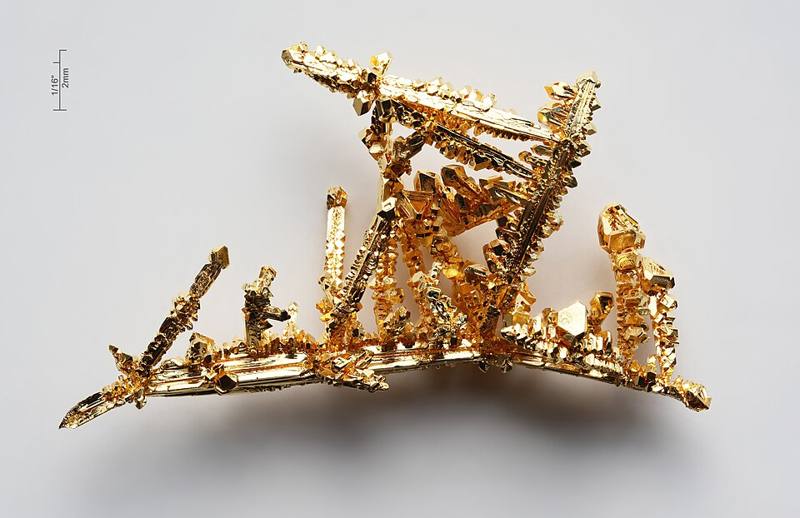
Gold was one of the first metals people worked, because it occurs as shiny native metal that can be shaped without smelting. Some of the oldest known worked gold objects come from the Varna Necropolis in Bulgaria, dated to around 4,600 to 4,200 BCE. From Egyptian collars to modern chains, jewelry has always been gold's most visible use. See gold in the ancient world.
Jewelry and gold demand
According to the World Gold Council, jewelry has long been the largest single category of annual gold demand, often accounting for roughly 40 to 50 percent in many years. The share falls when prices rise sharply, because buyers purchase less weight for the same money, and rises when prices are stable.
The biggest jewelry markets are India and China, followed by the Middle East, the United States and Southeast Asia.
How tastes vary around the world
| Region | Common preferences |
|---|---|
| India | High-purity 22K jewelry, heavy pieces for weddings and family savings |
| China | 24K "chuk kam" (pure gold) traditionally; lighter, design-led pieces increasingly popular |
| Middle East and Gulf | 21K and 22K, intricate designs, gold markets known as souks |
| United States | 10K and 14K most common; 18K for luxury |
| Europe | 18K common in Italy and France; 9K popular in the UK |
Higher karats are softer and more yellow; lower karats are harder and paler. See karats explained.
Gold as savings you can wear
In many cultures, gold jewelry is more than decoration. It is a store of value passed between generations and given at weddings and family celebrations. Families in South Asia and the Middle East have long treated high-karat jewelry as a form of savings, because it can be sold or exchanged for its gold content.
In these markets, jewelry is often priced by weight at the day's gold price plus a making charge for the labor, rather than at a fixed retail price.
Colors of gold
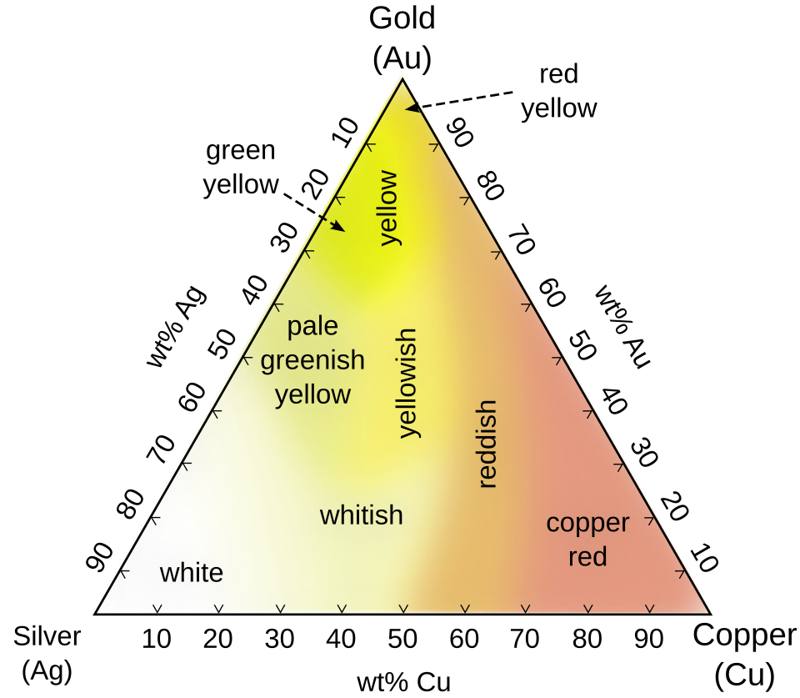
Pure gold is yellow, but alloys create other colors:
- Yellow gold: gold with silver and copper.
- White gold: gold with white metals such as palladium or nickel, often rhodium plated.
- Rose gold: more copper.
- Green gold: more silver.
Solid, plated or filled?
Jewelry labeled "gold" can mean very different things. Solid gold items are alloyed through and through. Plated items have a thin layer over a base metal. Gold-filled items have a thicker bonded layer. Check stamps and descriptions carefully. See plated, filled and vermeil and hallmarks.
Caring for gold jewelry
- Clean with warm water, mild soap and a soft brush.
- Remove jewelry before swimming in chlorinated pools; chlorine can damage some alloys.
- Store pieces separately so harder stones and metals do not scratch softer gold.
- Have prongs on gem settings checked periodically.
- Re-plate white gold with rhodium when it starts to look yellow.
Buying jewelry wisely
- Check the karat stamp and the maker's mark.
- Ask whether the price includes a making charge and how it is calculated.
- Keep receipts and certificates.
- Remember that resale value is usually based on gold weight, not the original retail price.
This is general education, not financial advice. Jewelry is usually a poor short-term investment because of making charges and retail markups.
For a full buying checklist, see buying gold safely.